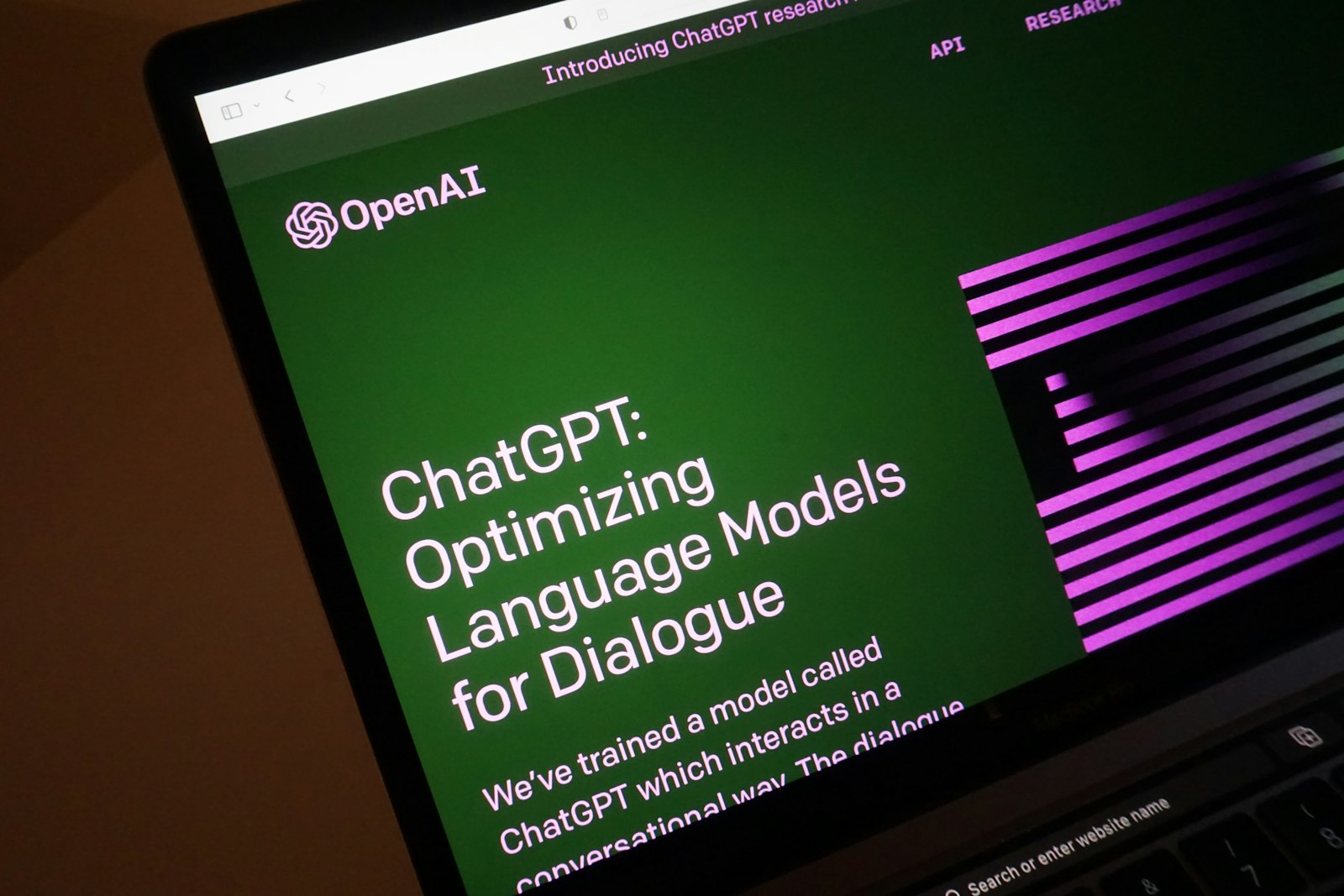
A managing director asked us the question last week, in Zurich, between two coffees: "Does ChatGPT talk about us?" He had no idea how to check. We opened his laptop, typed a question his customers ask every day, and read the answer together. Three companies named. None of them his. Two of them direct competitors.
That moment has become ordinary. A growing share of your future customers no longer types a query into Google to compare ten links. They ask an assistant for a recommendation, get two or three names, and call the first one. If you are not on that shortlist, you were not rejected after comparison: you were never introduced.
At Birdy, we have automated this protocol into a diagnosis called the Birdy Visibility Score. It runs the same questions across ChatGPT, Perplexity, Gemini and Google, and identifies in under a minute the blockers preventing your business from being recommended.
The 10 minute test
Open three tabs: ChatGPT, Perplexity and Gemini. Use a private window or sign out of your account, otherwise the assistant answers based on your history and you will see your own company for the wrong reasons.
Then ask five questions, in this order.
1. The trade plus city question. "What are the best [your trade] companies in [your city]?" This is the closest thing to a buyer ready to act.
2. The problem question. Describe the pain, not the category. "Our production line software keeps failing and our supplier is unresponsive, who can help in the Basel area?" Customers describe problems, rarely industries.
3. The comparison question. "What is the difference between [competitor A] and [competitor B] for [your service]?" Watch whether your name shows up spontaneously as a third option.
4. The direct question. "What can you tell me about [your company name]?" Check accuracy: activity, city, services, size. An assistant that describes you half wrong is close to worse than one that ignores you.
5. The recommendation question. "I am looking for a reliable [trade] provider in [city], give me three names with their strengths." This is the closest simulation of real purchase intent.
Log every answer in a simple sheet: cited yes or no, position, accurate or wrong details, sources shown. Run it again a week later, answers vary.
The three possible verdicts
You never appear. This is the most common case for Swiss SMEs. The assistant has too little material about you: few mentions outside your own website, no pages answering the questions people actually ask, no trust signals. You are invisible in the layer that builds the shortlist.
You appear, but poorly described. The assistant cites you with an old company name, an activity you dropped, a city you left, or services that are not yours. This almost always comes from contradictory information scattered across the web: an outdated directory listing, a stale LinkedIn page, a multilingual site telling two different stories.
You appear correctly. Good, but look at who is cited alongside you and in what order. The real question becomes: what arguments does the assistant retain about your competitors and not about you?
Finished the test? Let's see what a full AI-engine diagnosis reveals. Get my Birdy Visibility Score
Why an assistant cites one company over another
Assistants do not rank like a classic search engine. They assemble an answer from what they treat as verifiable, cross checked facts. Five factors carry weight.
Third party mentions. An assistant trusts what others say about you more than what you say about yourself. Trade press, professional directories, industry associations, partners, customer reviews: every consistent mention reinforces your company as a real entity.
Information consistency. Exact name, address, phone, activity, service area: identical everywhere. A mismatch between your website, your Google listing and your LinkedIn page creates doubt, and doubt eliminates.
Pages that genuinely answer questions. Assistants draw on content structured as clear questions and answers, with numbers, timelines and price ranges. A "Our values" page is useless. A page titled "How much does a heat pump installation cost in the canton of Zurich" is quotable.
Proof. Detailed customer reviews, concrete cases with measured outcomes, named references, certifications. These are the elements an assistant reuses to justify its recommendation.
Structured data. Technical markup on your site (organisation, services, reviews, frequently asked questions) lets a machine read your information without interpreting it. Not magic, just basic hygiene.
The action plan, from quickest to most structural
Week 1: clean up your identity. Align name, address, phone and description across your website, Google Business profile, LinkedIn, industry directories and sector platforms. Delete or correct old listings. Thankless work, and the fastest way to fix wrong descriptions.
Week 2: build answer pages. List the twenty questions customers actually ask you by phone or email. Create one page or section per cluster, with dated, quantified answers. You are writing for a busy human, and for a machine looking for a quotable sentence.
Week 3: industrialise proof. Systematically request a review after each completed project, with detail about the work delivered. Publish two or three full customer cases: starting situation, what was done, measured result.
Week 4: get off your own website. An interview in a trade publication, a talk at a professional association, a technical contribution on an industry site. Three solid external mentions beat thirty generic blog posts.
Ongoing: measure. Re run the five question test every month across the three assistants and keep the record. Today, that is your only reliable dashboard.
Mistakes that cost you the citation
Publishing twenty generic articles with no point of view: assistants recognise them and find nothing worth quoting. Leaving an old address in ten directories. Hiding pricing entirely, when a range is enough to become quotable. Talking only about yourself, never about the customer problem. And above all, assuming classic search optimisation is enough: ranking first on Google does not guarantee an AI citation, these are two different mechanics feeding partly on the same signals.
How long before it shows
Let us be honest about timelines. Consistency fixes propagate within a few weeks. Answer pages and external mentions take two to four months to change assistant responses, with strong variation between models. This is not a channel to switch on the week before a hard quarter, it is a position to take before your competitors do.
Across Switzerland, from Zurich and Basel to Bern, Geneva and Lausanne, the window is still wide open. In most sectors we analyse, assistants cite three to five players per query, often the same ones, rarely the ones with the best service. They cite the ones that are easiest to read.
From test to diagnosis
The ten minute test tells you where you stand. It does not tell you why your competitor is cited instead of you, or what to fix first in your specific case.
That is exactly what the Birdy Visibility Score covers: we query the main assistants on your commercial searches, we document who gets cited and from which sources, and we hand you the priority actions ranked by impact.
The diagnosis is free and takes under a minute. It then becomes the starting point of a monthly engagement to gradually strengthen the signals that turn your business into a recommended reference on AI engines.
For the classic search side, which still feeds most of the signals AI assistants rely on, see our approach to search visibility and SEO.